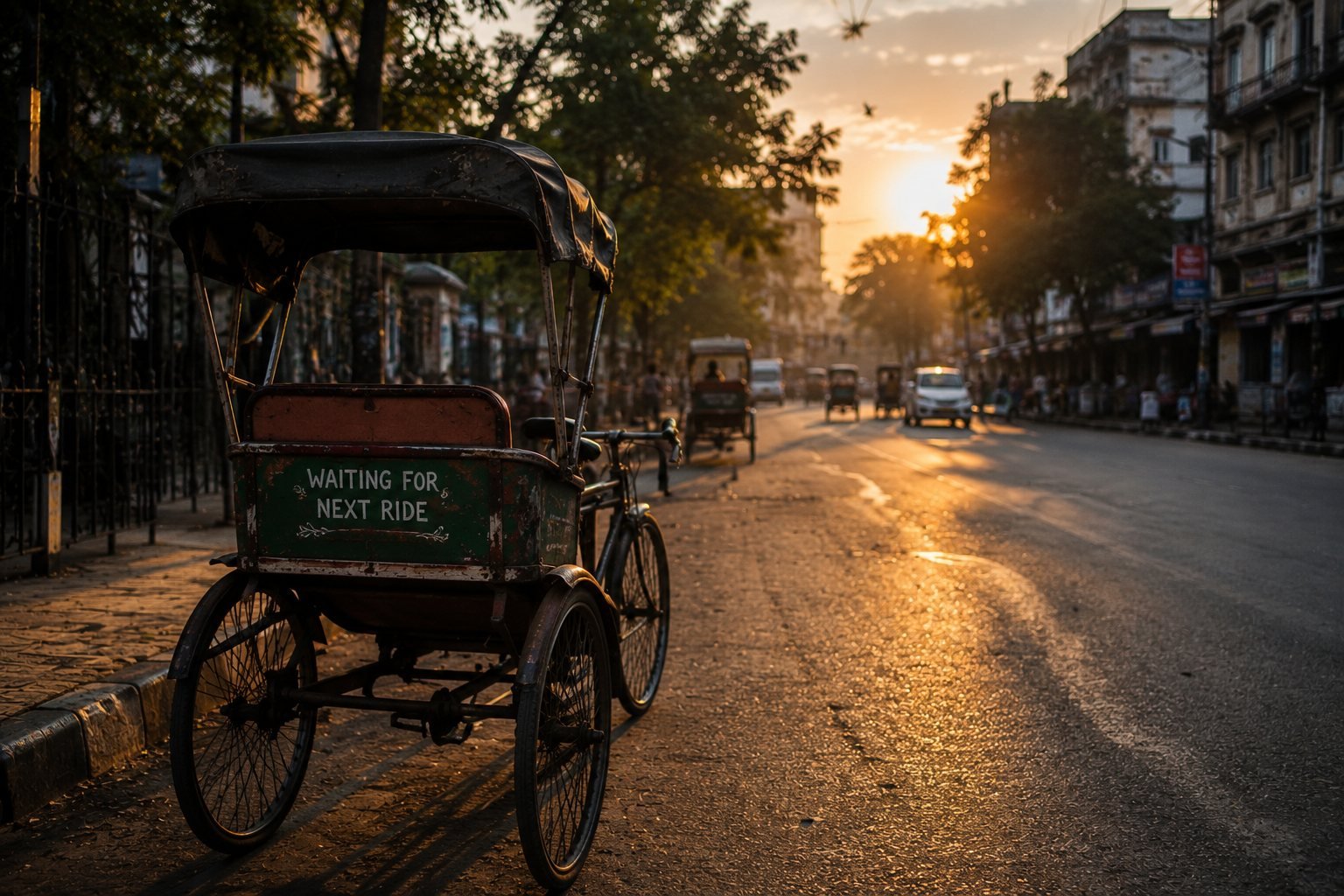
Rickshaw ke peeche sirf chaar shabd likhe the — “Waiting for Next Ride.” Na koi flashy quote, na “Horn OK Please”, na koi bada message. Bas itna sa ek sentence. Pehli nazar mein laga jaise kisi ne timepass mein paint kar diya ho. Lekin jitni der main us rickshaw ko dekhta raha, utna hi laga ki shayad ye sirf us rickshaw ki kahani nahi thi. Ye hum sab ki kahani thi.
Hum aksar sirf destination dekhte hain. Jab ride chal rahi hoti hai, tab sab kuch meaningful lagta hai. Lekin kisi bhi safar ka sabse bada hissa chalna nahi, balki rukna hota hai. Ek ride khatam hoti hai aur doosri shuru hone ke beech jo khamoshi hoti hai, wahi asli zindagi hai. Wahi waqt hai jab koi taaliyan nahi bajata, koi appreciation nahi milti, aur koi guarantee nahi hoti ki agla mauka kab aayega.
Ek rickshaw puller ka din bhi shayad isi tarah guzarta hoga. Kuch minute kisi ko uski manzil tak pahunchane mein nikalte hain, aur usse kahin zyada waqt kisi mod, kisi gali ya kisi ped ki chhoti si chhaya ke neeche intezaar karte hue. Har guzarta hua insaan ek possibility hota hai. Shayad ye sawari ban jaaye. Shayad nahi. Woh kisi ko rokta nahi, kisi se shikayat nahi karta. Bas wahin rehta hai, taiyaar, jaise usse pata ho ki umeed bhi roz ki kamai ka ek hissa hai.
Kolkata ki purani galliyon mein aaj bhi cycle aur hand-pulled rickshaw sirf ek transport nahi, ek zarurat hain. Un tang raston mein jahan bade vehicles nahi pahunch paate, wahi rickshaw logon ko unki manzil tak le jaate hain. Lekin un safaron ke beech jo lambi-lambi khaali ghadiyan hoti hain, unke baare mein koi baat nahi karta. Shayad isliye kyunki waiting kabhi headline nahi banti. Log sirf movement dekhte hain, patience nahi.
Thodi door aur rickshaw khade the. Kuch drivers baat kar rahe the, kuch chup-chaap baithe the. Sab ek hi customer ka intezaar kar rahe the, phir bhi unmein ajeeb si dushmani nahi thi. Shayad kyunki woh jaante the ki har kisi ki rozi-roti isi umeed par tiki hai. Aaj kisi aur ki baari hai, kal meri bhi aa sakti hai. Kabhi-kabhi mushkilein insaan ko competitor se pehle humsafar bana deti hain.
Sabse khoobsurat baat ye thi ki us rickshaw ke peeche likha hua message shikayat nahi tha. Woh ye bhi likh sakta tha ki “No Customers”, ya “Life is Hard”, ya phir koi aur kadvi baat. Lekin usne sirf likha, “Waiting for Next Ride.” Us ek line mein haar nahi thi. Bas patience tha. Bas umeed thi.
Aur shayad isi wajah se woh message itna gehra laga. Kyunki hum sab apni-apni next ride ka wait kar rahe hain. Kisi ke liye woh ek job offer hai. Kisi ke liye ek customer. Kisi ke liye ek phone call. Kisi ke liye ek maafi. Aur kisi ke liye bas ek mauka, dobara shuru karne ka.
Ho sakta hai aaj tumhari life bhi kisi khaali rickshaw ki tarah rukhi hui lage. Ho sakta hai tumhe lage ki sab aage badh rahe hain aur tum bas wait kar rahe ho. Lekin shayad kahani yahin khatam nahi hoti. Kabhi-kabhi zindagi ka sabse bada mod tab aata hai jab hum bas wahi rehte hain—thake hue, lekin taiyaar.
Kabhi-kabhi bas itna hi kaafi hota hai…
Waiting for the Next Ride.