🍵 The First Pour — India’s Chai Story
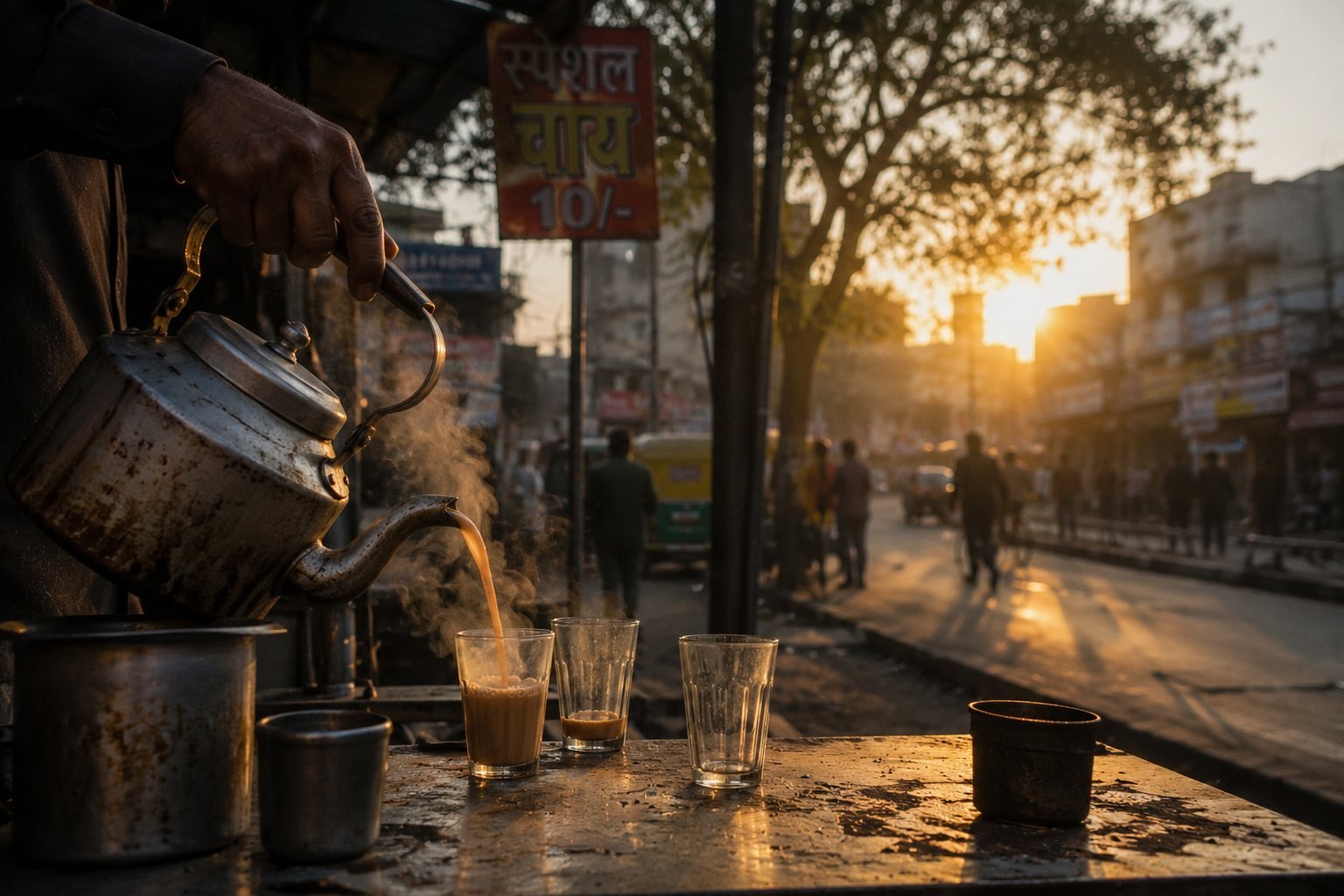
India doesn’t wake up with alarms; it wakes up with the whistle of kettles and the call of “Chai garam!” echoing through streets, stations, and homes. The first pour of tea in the morning is more than a beverage — it’s a ritual, a pause, a connection.
🌿 Chai as a Social Thread
Tea is the most democratic drink in India. Whether it’s a kulhad in Uttar Pradesh, cutting chai in Mumbai, Irani chai in Hyderabad, or noon chai in Kashmir — every sip carries the same meaning: togetherness.
- A student finds courage before exams.
- A worker finds laughter after a long shift.
- A traveler finds a friend at a roadside stall.
Tea dissolves barriers. One sip, and suddenly, you’re not alone.
☕ The Emotional Connection
Psychologists say rituals create bonds. In India, chai is that ritual. Offering tea is offering warmth. Sharing tea is sharing trust.
At roadside stalls, strangers strike up conversations. A lonely person walking in for a cup often walks out with a new friend. That’s the magic of chai — it turns solitude into companionship.
🏙️ Tea Culture Across India
Every region has its flavor:
- Kulhad chai — earthy, fragrant, served in clay cups.
- Cutting chai — strong, half‑glass portions, perfect for quick chats.
- Irani chai — milky, sweet, paired with bun maska.
- Noon chai — pink, salty, Kashmiri warmth.
Yet the essence is the same: tea is never just about taste, it’s about connection.
🌧️ Tea and Loneliness
For those living alone, tea becomes a companion. The kettle’s whistle is a reminder that warmth exists. Many Indians say that when they feel isolated, they step out for chai — not just for the drink, but for the people.
A sip of tea can spark a conversation, a smile, or even a lifelong friendship. In a world where digital screens dominate, chai stalls remain the original social networks.
📖 The Story Beyond the Cup
Bollywood has captured this too — from lovers meeting over chai in Chalte Chalte to friends bonding in Wake Up Sid. Literature and poetry often describe tea as a metaphor for pause, reflection, and intimacy.
Tea is India’s emotional thread. It ties together strangers, families, lovers, and dreamers. And in every corner of the country, the first pour is the beginning of countless untold stories.
🍵 The Second Sip
If the first pour is about beginnings, the second sip is about connection. Across India, chai is rarely drunk alone. Even when you sit by yourself at a stall, the second sip almost always comes with company — a stranger’s smile, a vendor’s story, or a friend’s laughter.
🌿 Chai as a Conversation Starter
India’s tea stalls are the country’s most natural meeting places. No reservations, no dress codes, no barriers. Just a kettle, a bench, and the aroma of boiling leaves.
- In Mumbai, two strangers share a cutting chai while debating cricket scores.
- In Kolkata, poets gather at College Street to sip and recite verses.
- In Hyderabad, Irani cafés echo with conversations about politics and cinema.
- In Kashmir, noon chai warms hands and hearts during long winter evenings.
Every sip is an invitation: Tell me your story.
☕ From Loneliness to Friendship
Many Indians say that when they feel alone, they step out for chai. It’s not just about the drink — it’s about the people. A solitary student finds a listener. A traveler finds directions. A worker finds laughter.
Tea stalls are the original social networks. Before apps and timelines, chai was how people connected. One sip, and suddenly, you’re part of a community.
🏙️ The Culture of Sharing
The second sip is rarely yours alone. Someone will always say, “Ek aur bana do.” That shared cup becomes symbolic — of generosity, of belonging, of the idea that joy multiplies when shared.
In villages, neighbors gather around a kettle. In cities, colleagues bond over office chai breaks. In homes, families pause their day to sit together with steaming cups.
💬 The Stories That Brew
Bollywood has captured this beautifully. In Wake Up Sid, chai becomes the backdrop for friendship. In Chalte Chalte, it’s the spark of romance. In countless films, chai is shorthand for intimacy.
But beyond cinema, real life proves it daily. The second sip is when conversations deepen — when strangers become friends, when laughter replaces silence, when trust begins to form.
❤️ The Emotional Thread
Tea is India’s emotional glue. It ties together generations, communities, and strangers. The second sip reminds us that life is not meant to be lived alone.
As one writer once said, “Tea is the pause that lets us listen to each other.”
🍵 The Last Drop
If the first pour is about beginnings, and the second sip is about connection, then the last drop is about closure. It’s the moment when the cup is nearly empty, when the warmth fades, but the memory lingers.
🌿 Chai as a Symbol of Endings
In India, chai doesn’t just mark the start of conversations — it also marks their end. The last drop in a glass or kulhad often comes with:
- A promise to meet again.
- A smile that says “this was enough.”
- A silence that feels complete.
At roadside stalls, friends finish their tea before heading back to work. Lovers linger over the last sip before parting ways. Families end their evening with one final pour before bedtime.
☕ The Emotional Weight of the Last Sip
The last drop carries more than taste — it carries memory. It’s the reminder that every conversation, no matter how long, must pause. But chai teaches us that endings aren’t final; they’re simply pauses before the next pour.
Many Indians recall their most emotional goodbyes over tea. A student leaving for another city. A colleague moving to a new job. A friend shifting abroad. The last drop becomes symbolic — of gratitude, of closure, of the hope that tea will bring them together again someday.
🏙️ Pan‑India Tea Closures
- In Mumbai, the last sip of cutting chai before rushing to catch a train.
- In Delhi, the final kulhad emptied as laughter fades into the night.
- In Hyderabad, Irani chai cups stacked after hours of storytelling.
- In Kashmir, the last drop of noon chai warming hands before stepping into the snow.
Everywhere, the last drop is a gentle reminder: life moves on, but chai remains.
💬 The Stories That End with Tea
Bollywood often uses tea as a metaphor for closure. A quiet goodbye scene, a lingering sip, a pause before the credits roll. In real life, too, chai is how we end chapters — softly, warmly, without drama.
The last drop is not about loss; it’s about acceptance. It’s about knowing that conversations end, but connections endure.
❤️ The Emotional Thread
Tea is India’s emotional glue. The last drop teaches us that endings can be beautiful. That silence can be comforting. That even when the cup is empty, the warmth remains in memory.
As one poet wrote, “The last sip of tea is not the end of taste, but the beginning of remembrance.”